
Nicola A. Irvin, PhD
Biological Control Specialist and Research Scholar
Phone: (951) 827 4360
Fax: (951) 827 3086
nic.irvin@ucr.edu
Dr. Irvin joined the Hoddle laboratory in 2001 as a post doctoral scholar. Dr Irvin has had a heavy focus on researching the glassy-winged sharpshooter, Homalodisca vitripennis (Germar), and its Mymarid wasp biological control agentsGonatocerus ashmeadi, G. fasciatus, G. triguttatus, and G. tuberculifemur.
Dr. Irvin was promoted to Assistant Specialist in 2007, and awarded a Western Region Sustainable Agriculture Research and Education (Western SARE) grant to investigate the use of nectar cover crops for sustainable pest control in California vineyards. This four-year project ended in 2010.
Currently, Dr. Irvin is collaborating with Dr. Milosavljević on research investigating whether insectary plants (used to augment populations of natural enemies) and biodegradable hydrogel bead baits (for control of Argentine ants) can enhance natural enemy abundance and increase biological control of citrus pests.
Degrees
Ph.D. Entomology (1999), Lincoln University, New Zealand
B.S. First Class Honors, Horticultural Science (1996), Lincoln University, New Zealand
Professional Affiliations
- Member of NZIAS (New Zealand Institute for Agricultural Science) since 1996.
- Member of New Zealand Plant Protection Society since 1997.
- Member of New Zealand Ecological Society since 1999.
- Member of New Zealand Royal Society since 1999.
- Member of Entomological Society of America since 2001.
Research Interests
Dr. Irvin is a graduate of Lincoln University, New Zealand, where she completed a Bachelor of Horticultural Science and was awarded first-class honors. Her honors project compared hover fly (Diptera: Syrphidae) numbers, gut fullness, female egg load and pollen preference of three New Zealand hover fly species between arable and florally-diverse habitats. Dr. Irvin went on to complete her PhD in Entomology and her thesis examined the use of understorey management for the enhancement of leafroller (Lepidoptera: Tortricidae) parasitoids (Dolichogenidea tasmanica) in apple orchards located in Canterbury, New Zealand.
In April 2001, Dr. Irvin joined the Hoddle laboratory at University of California, Riverside, and has been involved in researching the biology of three Gonatocerus parasitoids associated with the biological control of the glassy-winged sharpshooter (Homalodisca vitripennis), a significant pest of many agriculturally important crops in southern California. Dr. Irvin also conducted research investigating the fitness costs for transgenic mosquitoes expressing the green fluorescent protein marker. The results of her work showed that survival, fecundity, and longevity are significantly reduced in transgenic mosquitoes relative to the untransformed laboratory strain. This research was the first of its kind in the world and has important implications for the development and utilization of this technology for mosquito control programs, or suppression of disease transmission, which are based on genetic modification.
In 2007, Dr. Irvin received a four year grant from Western Region Sustainable Agriculture Research and Education (Western SARE) to investigate the use of nectar cover crops for sustainable pest control in California vineyards. This work demonstrated that an irrigated buckwheat cover crop unexpectedly resulted in higher densities of pestiferous leafhoppers on grape leaves which could be attributed to these pests preferring well-irrigated, vigorously growing vines. An irrigated buckwheat cover crop was also associated with increased berry size, reduced sugar content of berries, and reduced berry quality because of increased insect feeding damage.
In 2017, Dr. Irvin conducted research investigating the potential of several native flowering plants for enhancing the fitness of parasitoids introduced from Pakistan to attack the nymphs of Asian citrus psyllid (ACP). This pest had become a major threat to the California citrus industry because it feeds on the stems and leaves of citrus trees and transmits a bacterium that causes a lethal citrus disease known as huanglongbing (HLB or citrus greening).
Currently, Dr. Irvin is collaborating with Dr. Milosavljević on research investigating whether insectary plants (used to augment populations of natural enemies) and biodegradable hydrogel bead baits (for control of Argentine ants) can enhance natural enemy abundance and increase biological control of citrus pests. Invasive ants eat honeydew excreted by sap sucking pests (aphids, scale, mealybugs, pysllids, etc) and protect these pests from being attacked by their natural enemies. Low-toxicity, soil applied biodegradable alginate hydrogel beads for ant control were developed by Hoddle Lab. This research will provide IPM-based tools for sustainable management of ants and sap sucking insects in citrus.
Recent Projects
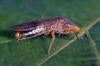
Biological Control of the Glassy-Winged Sharpshooter
The Glassy-Winged Sharpshooter feeds exclusively on xylem fluids and is a major pest on citrus. More...
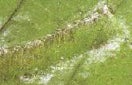
Significance of Brochosomes on GWSS Eggs
The ecological significance of brochosomes on glassy-winged sharpshooter egg masses, and parasitism by G. ashmeadi. More...
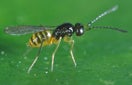
Glassy-winged Sharpshooter Parasitoids
Investigating the biology and competitive ability of a neoclassical GWSS parasitoid imported from Argentina. More...
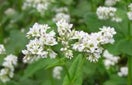
Cover Crops as Sustainable Pest Control
Investigating the strengths and limitations of cover cropping under the unique growing conditions representative of grape producing areas of Southern California. More...
Assessing realized lifetime parasitism of Gonatocerus ashmeadi
Measuring real lifetime contributions of female G. ashmeadi to parasitism of GWSS egg masses in citrus orchards. More...
Publications
Hoddle, M. S., Singh, S., Keogh, E., Cong, L., Li, Y., Yao, W., Gomez-Marco, F., Hoddle, C. D., Irvin, N. A., Lewis, M., Milosavljević. I., 2022. Using infra-red sensors and the Internet of Things to automate Argentine ant counts. CAPCA Adviser 25(5), 40-45.
Milosavljević I., Irvin, N. A., McCalla, K., Hoddle, M. S., 2022. Synergizing IPM of Argentine ant and biocontrol of sap sucking pests with biodegradable hydrogels, infra-red sensors, and cover crops in commercial citrus orchards. Topics in Subtropics Newsletter, Summer 2022, pp. 6-11.
Milosavljević I., Hoddle, C. D., Morgan, D. J. W., Irvin, N. A., Hoddle, M. S., 2022. Natural enemies have significantly suppressed Asian citrus psyllid population in southern California. Topics in Subtropics Newsletter, Summer 2022, pp. 2-6.
Milosavljević, I., Irvin, N. A., Lewis, M., Hoddle, M. S., 2022. Spinosad-laced hydrogel baits effectively control Argentine ants in California citrus. CAPCA Adviser 25(5), 34-38.
Irvin, N. A., Milosavljević, I., Hoddle, M. S., 2022. Advances in cover cropping for enhancing natural enemies of Asian citrus psyllid in southern California citrus orchards. CAPCA Adviser 25(5), 48-54.
Irvin, N. A., Pierce, C., Hoddle, M. S., 2021. Evaluating the potential of flowering plants for enhancing predatory hoverflies (Syrphidae) for biological control of Diaphorina citri (Liviidae) in California. Biological Control 157, 104574.
Irvin, N. A., Milosavljević, I., Hoddle, M. S., 2020. Flowering plants may enhance biocontrol of ACP by hover flies. Citrograph 11 (4), 46-51.
Irvin, N. A., Hoddle, M. S., 2020. Assessing the flight capabilities of fed and starved Allograpta obliqua (Diptera: Syrphidae), a natural enemy of Asian citrus psyllid, with computerized flight mills. Florida Entomologist 103(1), 139-141.
Irvin, N. A., Hagler, R. J., Hoddle, M. S., 2018. Measuring natural enemy dispersal from cover crops in a California vineyard. Biological Control 126, 15-25.
Irvin, N. A., Bistline-East A., Hoddle, M. S. 2016. The effect of an irrigated buckwheat cover crop on grape vine productivity, and beneficial insect and grape pest abundance in southern California. Biological Control 93: 72-83.
Irvin, N. A., Hoddle, M. S., 2015. The effect of buckwheat flowers and cahaba vetch extrafloral nectaries on fitness of the vine mealybug parasitoid Anagyrus pseudococci (Hymenotpera: Encyrtidae). Florida Entomologist 98(1): 237-242.
Irvin, N. A., Pinkard, T. R, Perring, T. M., Hoddle, M. S., 2014. Evaluating the potential of buckwheat and cahaba vetch as nectar producing cover crops for enhancing biological control of Homalodisca vitripennis in California vineyards. Biological Control 76: 10-18
Irvin, N. A., Suarez-Espinoza, J., Hoddle, M. S., 2014. Maximum realised lifetime parasitism and occurrence of time limitation in Gonatocerus ashmeadi (Hymenoptera: Mymaridae) foraging in citrus orchards. Biocontrol Science and Technology 24(6): 662-679.
Irvin, N. A., Hagler, J. R., Hoddle, M. S., 2012. Laboratory investigation of triple marking the parasitoid Gonatocerus ashmeadi with a fluorescent dye and two animal proteins. Entomologia Experimentalis et Applicata 143(1): 1-12.
Gutierrez, A. P., Ponti L., Hoddle, M., Almeida, P. P., Irvin, N. A., 2011. Geographic distribution and relative abundance of the invasive glassy-winged sharpshooter: Effects of temperature and egg parasitoids. Environmental Entomology 40(4): 755-769.
Irvin, N. A., Hoddle, M. S., 2011. Comparative assessments of Gonatocerus ashmeadi and the ‘new association’ parasitoid Gonatocerus deleoni (Hymentoptera: Mymaridae) as biological control agents of Homalodisca vitripennis (Hemiptera: Cicadellidae). Biocontrol Science and Technology 21(7): 839-863.
Irvin, N. A., Hoddle, M. S., 2010. Comparative assessments of Gonatocerus ashmeadi and the ‘new association’ parasitoid Gonatocerus tuberculifemur (Hymentoptera: Mymaridae) as biological control agents of Homalodisca vitripennis (Hemiptera: Cicadellidae). Biological Control 55, 186-196.
Irvin, N. A., Suarez-Espinoza, J., Hoddle, M. S. 2009. The functional response of Gonatocerus ashmeadi and the ‘new association’ parasitoid G. tuberculifemur attacking eggs of Homalodisca vitripennis. Environmental Entomology, 38(6): 1634-1641.
Irvin, N. A., Hoddle, M. S. 2009. Egg maturation, oosorption, and wing wear in Gonatocerus ashmeadi (Hymenoptera: Mymaridae), an egg parasitoid of the glassy-winged sharpshooter, Homalodisca vitripennis (Hemiptera: Cicadellidae). Biological Control 48: 125–132.
Irvin, N. A., Hoddle, M. S. 2008. Should Neoclassical Biological Control Agents from Argentina Be Released in California for Control of the Glassy-winged Sharpshooter? Pierce's Disease Research Symposium, San Diego, USA, December 15-17, pp. 66-69.
Irvin, N. A., Hoddle, M. S. 2007. Should Neoclassical Biological Control Agents from Argentina Be Released in California for Control of the Glassy-winged Sharpshooter? Pierce's Disease Research Symposium, San Diego, USA, December 12-14, pp. 90-93.
Irvin N. A., Hoddle. M. S. 2007. Evaluation of floral resources for enhancement of fecundity and fitness of Gonatocerus ashmeadi, an egg parasitoid of the glassy-winged sharpshooter, Homalodisca vitripennis. Biological Control 40: 80-88.
Irvin, N. A., Hoddle, M. S., Castle. S. J. 2007. The effect of resource provisioning and sugar composition of foods on longevity of three _Gonatocerus _spp., egg parasitoids of Homalodisca vitripennis. Biological Control 40: 69-79.
Hoddle, M. S., Irvin, N. A. 2006. Realized life time parasitism of glassy-winged sharpshooter egg masses by Gonatocerus ashmeadi. Pierce's Disease Research Symposium, San Diego, USA, November 27-29, 2006. pp. 80-83.
Irvin, N. A., Hoddle, M. S. 2006. The effect of intraspecific compeition on progeny sex ratio in _Gonatocerus _spp. for Homalodisca coagulata egg masses: economic implications for mass rearing and biological control. Biological Control 39: 162-170.
Irvin, N. A., Hoddle, M. S., Morgan, D. J. W. 2006. Competition between Gonatocerus ashmeadi and G. triguttatus for glassy-winged sharpshooter (Homalodisca coagulata) egg masses. Biocontrol Science and Technology 16 (4): 359-375.
Irvin, N. A., Wratten, S. D., Frampton, C. M., Chapman, R. B., Burnip, G., Suckling, M. 2006. The effects of apple understorey management on parasitoids of leafroller (Lepidoptera: Tortricidae) in New Zealand. Agricultural and Forest Entomology 8: 25-34.
Hoddle, M. S., Irvin, N. A. 2005. Realized life time parasitism of glassy-winged sharpshooter egg masses by Gonatocerus ashmeadi. Pierce's Disease Research Symposium, San Diego, USA, December 5-7, 2005. pp. 330-333.
Irvin, N. A., Hoddle, M. S. 2005. The competitive ability of three mymarid egg parasitoids (_Gonatocerus _spp.) for glassy-winged sharpshooter (Homalodisca coagulata) eggs. Biological Control 34: 204-214.
Irvin, N. A., Hoddle, M. S. 2005. Determination of Homalodisca coagulata (Hemiptera: Cicadellidae) egg ages suitable for oviposition by Gonatocerus ashmeadi, Gonatocerus triguttatus, and Gonatocerus fasciatus (Hymenoptera: Mymaridae). Biological Control 32: 391-400.
Pilkington L. J., Irvin, N. A., Boyd, E. A., Hoddle, M. S., Triapitsyn, S. V., Carey, B. G., Jones, W. A., Morgan, D. J. W. 2005. Introduced parasitic wasps could control glassy-winged sharpshooter. California Agriculture. 59 (4): 223-228.
Gurr, G. M., Scarratt, S. L., Wratten, S. D., Berndt, L., Irvin, N. A. 2004. Ecological engineering, habitat manipulation and pest management. In: Ecological Engineering for pest management: advances in habitat manipulation for arthropods. Gurr, G. M., Wratten, S. D, Altieri, M. A. (eds). pp. 1-12.
Irvin N. A., Hoddle, M. S. 2004. Oviposition preference of Homalodisca coagulata for two Citrus limon cultivars and influence of host plant on parasitism by Gonatocerus ashmeadi and G. triguttatus (Hymenoptera: Mymaridae). Florida Entomologist 87: 504-510.
Irvin, N. A., Hoddle, M. S., O’Brochta, D. A., Carey, B.P., Atkinson, P. W. 2004. Assessing fitness costs for transgenic _Aedes aegypti _expressing the green fluorescent protein marker and transposase genes. Proceedings of the National Academy of Sciences 101 (3): 891-896.
Pilkington, L. J., Irvin, N. A., Boyd, E. A., Hoddle, M. S., Triapitsyn, S. V., Carey, B. G., Morgan, D. J. W. 2004. Biological control of glassy-winged sharpshooter in California. In: Proceedings of the 4th California Conference on Biological Control, University of California, Berkeley, July 13-15, 2004. Hoddle, M. S. (ed.). pp. 133-136.
Scarratt, S. L., Wratten, S. D., Lavandero, B., Irvin, N. A. 2004. A hierarchy of research approaches to the successful use of "resource subsidies" to improve parasitoid performance. Proceedings of the IV California Conference of Biological Control, Berkeley, California, USA, 13-15 July, 2004. pp. 88-94.
Hoddle, M. S., Irvin, N. A. 2003. Interspecific competition between Gonatocerus ashmeadi, G. triguttatus and G. fasciatus for glassy-winged sharpshooter egg masses. Pierce's Disease Research Symposium, San Diego, USA, December 8 - 11, 2003. pp. 251-254.
Hoddle, M. S., Irvin, N. A. 2002. Interspecific competition between Gonatocerus ashmeadi and G. triguttatus for glassy-winged sharpshooter egg masses. Pierce's Disease Research Symposium, San Diego, USA, December 15 - 18, 2002. pp. 86-87.
Berndt, L., Gurr, G. M., Wratten, S. D., Irvin, N. A. 2001. An historical analysis of habitat manipulation research. 1st International Symposium on Biological Control of Arthropods, Hawaii, USA, 17-21 September 2001.
Irvin, N. A., Hoddle, M. S. 2001. Egg age preference and "window of susceptibility" of Homalodisca coagulata eggs to attack by _Gonatocerus ashmeadi _and G. triguttatus. Pierce's Disease Research Symposium, San Diego, USA, December 5 - 7, 2001. pp. 135-136.
Irvin, N. A., Wratten, S. D., Frampton, C. M. 2000. Understorey management for the enhancement of the leafroller parasitoid (Dolichogenidea tasmanica (Cameron)) in Canterbury, New Zealand orchards. Proceedings of the 4th International Hymenoptera Conference, held in Canberra, Australia, in January 1999. Hymenoptera: Evolution, Biodiversity and Biological Control. Austin, A. D.; Dowton, M (eds.). pp. 396-403.
Wratten, S. D., Gurr, G. M., Berndt, L., Irvin, N. A. 2000. Adding floral resources to agro-ecosystems: managing the consequences for third and fourth trophic levels. XXI International Congress of Entomology - XXI ICE, Brazil, August 2000.
Wratten, S. D., Gurr, G. M., Landis, D., Irvin, N. A., Berndt, L. A. 2000. Conservation biological control of Pests: Multi-trophic level effects. In: Californian Conference on Biological Control. Hoddle, M. (ed.). pp. 73-80.
Irvin, N. A. 1999. Understorey management for the enhancement of populations of a leafroller (Lepidoptera: Tortricidae) parasitoid (Dolichogenidea tasmanica (Cameron)) in Canterbury, New Zealand Apple Orchards. Doctor of Philosophy thesis, Lincoln University, Canterbury, New Zealand.
Irvin, N. A., Wratten, S. D., Chapman, R. B., Frampton, C. M. 1999. The effects of floral resources on longevity, populations and efficacy of the leafroller parasitoid (Dolichogenidea tasmanica (Cameron)) in apples. Proceedings of the New Zealand Plant Protection Conference 52: 84-88.
Irvin, N. A., Wratten, S. D., Frampton, C. M., Bowie, M. H., Evans, A. M., Moar, N. T. 1999. The phenology and pollen feeding of three hover fly (Diptera: Syrphidae) species in Canterbury, New Zealand. New Zealand Journal of Zoology 26(2): 105-115.
Gurr, G. M., Wratten, S. D., Irvin, N. A., Hossain, Z., Baggen, L. R., Mensah, R. K., Walker, P. W. 1998. Habitat manipulation in Australasia: recent progress and prospects for adoption. Proceedings of the sixth Australasian Applied Entomological Research Conference, Brisbane, Australia: Pest Management - Future challenges, September 1998. 1: 225-235.
Irvin, N. A. 1996. Hover flies (Diptera: Syrphidae): Trap efficiency, phenology and pollen feeding. Honors dissertation, Lincoln University, Canterbury, New Zealand.