![]() |
![]() |
|
|
© University
of California
|
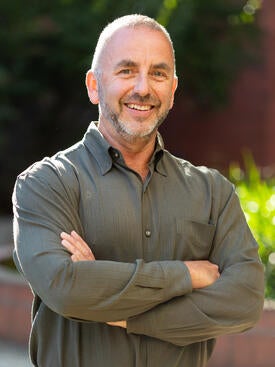
Mark S. Hoddle,
PhD
Biological
Control Specialist and Principal Investigator
Phone:
(951) 827 4714
Fax:
(951) 827 3086
|
Dr Hoddle has headed the research in this
laboratory since 1997 and is primarily involved in the identification
of pest problems where biological control could be a successful
approach. The location, release and evaluation of natural enemy
impacts on population growth features strongly in his research.
The evaluation of biological control agents are conducted primarily in
the field and, when necessary, aspects of both pest and natural enemy
biology and behavior are studied in the laboratory. Dr Hoddle's current projects include: Avocado Pest Research
Biological control of
the
glassy-winged sharpshooter (GWSS)
|
|
Nicola A.
Irvin, PhD
Biological
Control Specialist and Research Scholar
Phone:
(951) 827 4360
Fax:
(951) 827 3086
Email: nic.irvin@ucr.eduNicola Irvin Personal Webpage |
Dr
Irvin joined the Hoddle laboratory in 2001 as a post doctoral
scholar. Dr Irvin has a heavy focus on researching the
glassy-winged sharpshooter, Homalodisca
vitripennis (Germar), and its Mymarid wasp biological control
agents Gonatocerus ashmeadi, G. fasciatus, G. triguttatus and G.
tuberculifemur.
Dr. Irvin has since been promoted to Assistant Specialist and was recently awarded a Western Region Sustainable Agriculture Research and Education (Western SARE) grant to investigate the use of nectar cover crops for sustainable pest control in California vineyards. This three-year project began in June 2007. Dr. Irvin's current research projects include:
Dr. Irvin's publications are listed on her personal webpage |
|
Elissa S.
Wampler
Masters
Candidate
Phone:
(951) 827 4360
Fax:
(951) 827 3086
|
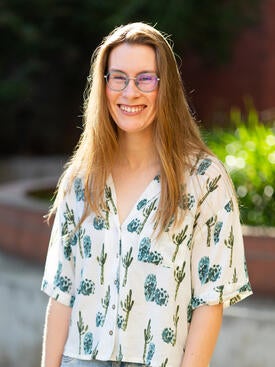
Elissa joined the Hoddle lab in June 2007 as a masters candidate. |
|
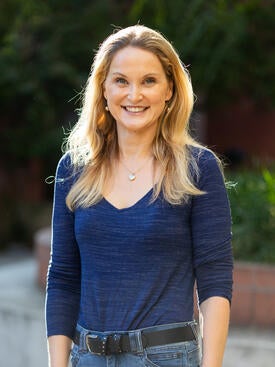
Elizabeth A.
Boyd, PhD
Phone:
(951) 827 4360
Fax:
(951) 827 3086
|
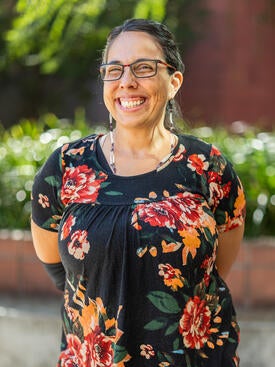
Elizabeth (Betsy) Boyd is investigating the risk posed to the native smoke-tree, blue-green, and green sharpshooters in Southern California habitats via the introduction and establishment of the exotic mymarid parasitoids (Gonatocerus sp.) released for control of the glassy-winged sharpshooter, Homalodisca vitripennis (Germar). Additionally, she is classifying the native parasitoid fauna of these indigenous sharpshooters and developing novel methods for future host specificity testing of insects used in biological control of arthropods. Dr. Boyd graduated with her Ph.D. in June 2007. She now has a post-graduate researcher position at the UC Kearney Agricultural Station. Non-target impact studies |
|
Postdoctoral
Research Scholar
Phone:
(951) 827 4360
Fax:
(951) 827 3086
|
Dr Pilkington contributed to the Hoddle laboratory
from
April 2004 to November 2005 as a post doctoral scholar. His
research was centered on
the glassy-winged sharpshooter, Homalodisca vitripennis (Germar),
and its Mymarid wasp biological control agents Gonatocerus ashmeadi, G. fasciatus and G. triguttatus. Glassy-winged sharpshooter research Biological control of the glassy-winged sharpshooter (GWSS) |
|
Paul
Rugman-Jones, PhD
Postdoctoral
Research Scholar
Phone:
(951) 827 2627
Email: paul.rugman-jones@ucr.edu |
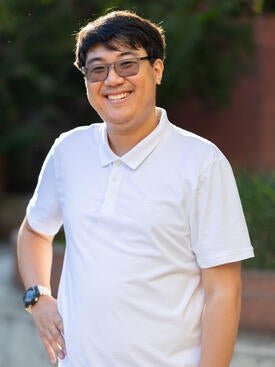
Dr. Rugman-Jones is conducting
research on avocado thrips, Scirtothrips
perseae and the avocado lace bug, Pseudacysta perseae. Specifically, he is using
molecular techniques to
determine the taxonomic status of what we currently regard as S. perseae and P. perseae and to
trace the origin
of the Californian populations of these exotic pests. In
addition,
he has developed a molecular key that can be used to diagnose
pest Scirtothrips species
and is currently working on a new molecular key to identify ~200
species of thrips (native and exotic) that are present in
California.
This is a collaborative project with the Stouthamer laboratory, also at
UC Riverside. |
|